
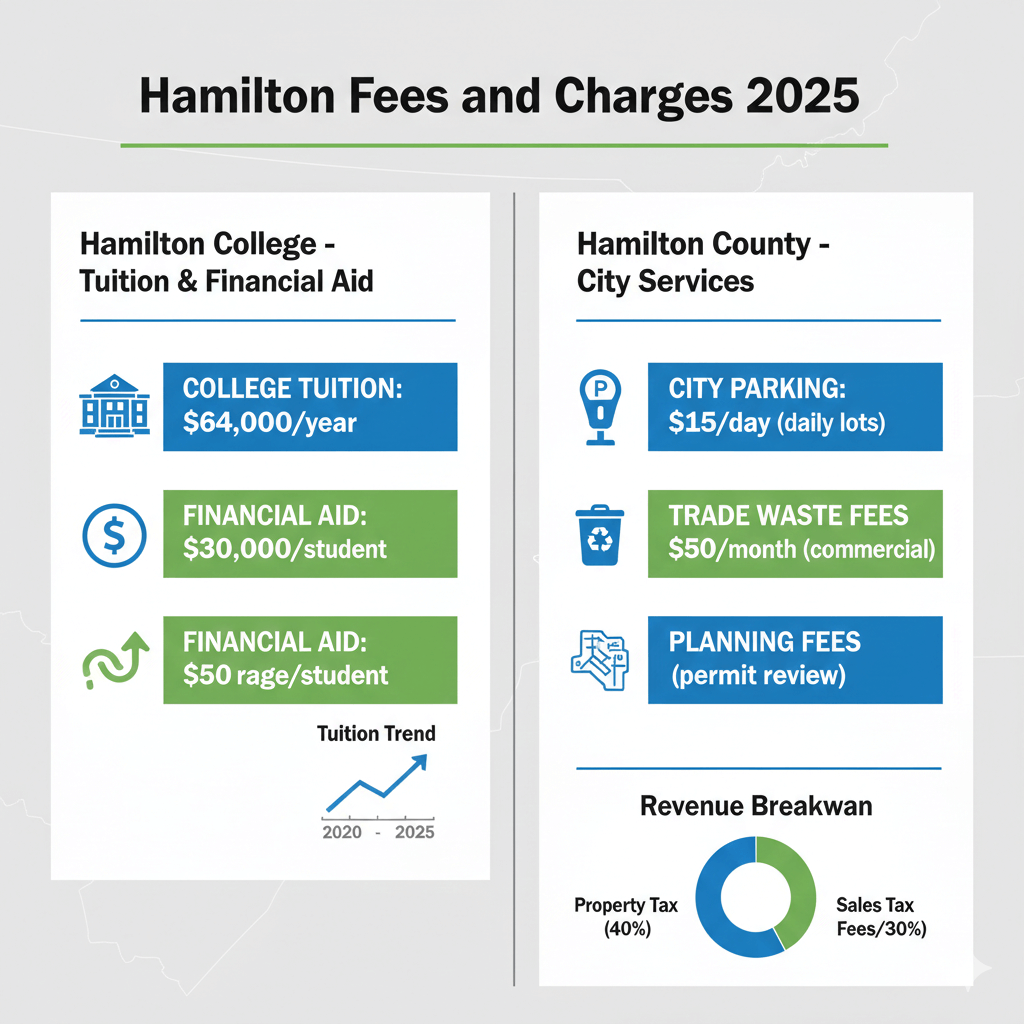
Hamilton Fees and College Costs in 2026
Hamilton County is known for its vibrant communities, quality education, and well-organized city services. For residents, students, and prospective families, understanding Hamilton fees and charges is essential for effective financial planning. This guide provides a comprehensive overview of HCC fees and charges, Trade waste fees and charges, Hamilton Planning fees, Hamilton College tuition 2025, and related costs for both in-state and out-of-state students.
Hamilton College is one of the leading educational institutions in the area, offering a wide range of programs. However, tuition and living costs can vary significantly depending on residency status and financial aid availability. International students often rely on specialized programs, such as Hamilton College financial aid for international students, to manage their expenses effectively.
Key areas covered in this guide include:
-
Detailed breakdown of Hamilton City parking fees and city service costs
-
Comparison of in-state and out-of-state tuition rates at Hamilton College
-
Insights on Hamilton college cost after aid, showcasing real savings through scholarships and grants
-
Step-by-step explanation of Trade waste fees and charges and their relevance to businesses
-
Overview of Hamilton Planning fees for permits, zoning, and city approvals
Comparing Hamilton’s fee structures with nearby counties reveals that Hamilton offers competitive rates for both residential and educational expenses. Residents highlight the transparency of city fees and easy access to payment portals as major advantages.
Pros of understanding these costs:
-
Enables accurate budgeting for students and residents
-
Helps international students plan for financial aid
-
Provides clarity for businesses regarding Trade waste fees and charges
Cons:
-
Fee structures may change annually
-
Lack of awareness can lead to penalties or missed deadlines
To stay updated on the latest Hamilton fees and charges, visit the official Hamilton County Auditor website and explore detailed breakdowns for colleges and city services.
Hamilton County Fees Overview
A Complete Look at Hamilton Fees and Charges for Residents
Hamilton County provides a wide range of services to its residents, funded through various Hamilton fees and charges. Understanding these fees is crucial for budgeting and avoiding penalties. From property taxes to utility charges, the county ensures transparency in its financial operations.
Key Hamilton fees and charges include:
-
Property taxes: Based on property value and location within the county
-
Administrative fees: Applied for record requests, licenses, and permits
-
Service fees: Covering public works, waste management, and city maintenance
-
Parking and traffic-related fines: Associated with Hamilton City parking fees
Comparing Hamilton County to neighboring counties like Franklin and Montgomery, Hamilton offers slightly lower residential service fees, making it more affordable for families and students. Residents frequently praise the online payment system and clear explanations of fees on the county auditor’s website.
Pros and Cons
Pros:
-
Transparent online access to all fees
-
Multiple payment options for convenience
-
Competitive rates compared to nearby counties
Cons:
-
Some fees increase annually
-
Understanding fee breakdowns may require careful review
Customer Testimonial Highlight
“I recently moved to Hamilton County and was impressed by how easy it was to check all city and county fees online. The clarity helped me plan my monthly budget without surprises,” says Jessica M., a Hamilton resident.
To avoid late payments or penalties, residents should regularly check the official Hamilton County Auditor website. Staying informed about Hamilton fees and charges ensures smooth financial planning and peace of mind.
HCC Fees and Charges
Understanding HCC Fees and Charges for 2026
Hamilton Community College (HCC) is a popular choice for students seeking affordable higher education. However, before enrolling, it’s essential to understand HCC fees and charges to plan your finances effectively. These fees cover tuition, student services, and other college-related costs, ensuring students have access to quality education and resources.
Breakdown of HCC Fees and Charges
-
Tuition: Calculated per credit hour for in-state and out-of-state students
-
Lab and course fees: Additional charges for science, computer, or technical courses
-
Registration fees: One-time or semester-based fees required for enrollment
-
Activity fees: Support campus events, clubs, and student organizations
-
Technology fees: Access to online platforms, software, and library services
Comparison with Competitors
Compared to other community colleges in Ohio, HCC offers competitive tuition rates. In-state students pay significantly lower per-credit-hour rates than out-of-state students, making it a budget-friendly option. Many students choose HCC over nearby colleges due to lower HCC fees and charges and flexible payment options.
Pros and Cons
Pros:
-
Affordable tuition for in-state students
-
Clear breakdown of all HCC fees and charges
-
Access to scholarships and grants for eligible students
Cons:
-
Out-of-state tuition is higher
-
Some specialized courses may have additional lab fees
Customer Testimonial Highlight
“I chose HCC because the fees were transparent, and I could calculate my semester costs in advance. The lab and activity fees were reasonable compared to other colleges I researched,” shares Daniel R., a current HCC student.
Prospective students should review the latest HCC fees and charges on the official HCC website to plan their budget, explore financial aid options, and ensure a smooth enrollment process.
Trade Waste Fees and Charges
Complete Guide to Trade Waste Fees and Charges in Hamilton
Businesses in Hamilton County must manage waste responsibly, which involves paying Trade waste fees and charges. These fees support the safe disposal of commercial waste, recycling, and hazardous materials while maintaining environmental standards across the city. Understanding these charges ensures compliance and helps businesses budget effectively.
Breakdown of Trade Waste Fees and Charges
-
Commercial waste collection fees: Charged based on the type and volume of waste
-
Recycling fees: For paper, plastics, metals, and other recyclable materials
-
Hazardous waste disposal: Special fees for chemicals, paints, and other regulated items
-
Late or non-compliance penalties: Additional charges if businesses fail to meet disposal guidelines
Comparison with Competitors
When compared to nearby counties, Hamilton’s Trade waste fees and charges are competitive, providing affordable options for small and medium-sized businesses. Many neighboring counties have higher collection fees or stricter hazardous waste regulations, which can increase operational costs. Hamilton also provides online portals to track payments and schedule waste pickups, offering convenience that competitors may lack.
Pros and Cons
Pros:
-
Transparent fee structure for commercial entities
-
Online payment and scheduling options
-
Encourages environmentally responsible practices
Cons:
-
Small businesses may find fees challenging without proper budgeting
-
Hazardous waste disposal can be costly
Customer Testimonial Highlight
“Managing our restaurant waste was much easier after understanding the Trade waste fees and charges in Hamilton. The online payment system saved us a lot of time and hassle,” says Maria K., a local business owner.
Businesses should visit the official Hamilton County Auditor website to review all Trade waste fees and charges, ensure compliance, and avoid penalties while keeping their operations environmentally responsible.
Hamilton City Parking Fees
Everything You Need to Know About Hamilton City Parking Fees
For residents, commuters, and visitors, understanding Hamilton City parking fees is essential to avoid fines and ensure smooth travel within the city. Parking costs vary based on location, duration, and type of parking, and the city provides multiple payment options for convenience.
Breakdown of Hamilton City Parking Fees
-
Metered parking: Hourly rates vary by downtown or commercial areas
-
Residential parking permits: Required for residents in designated zones
-
Commercial parking zones: Businesses may need permits for employee or delivery vehicles
-
Fines and penalties: Late payments or violations incur additional fees
Comparison with Competitors
Compared to neighboring cities, Hamilton’s Hamilton City parking fees are reasonably priced. Some nearby counties charge higher hourly rates for metered parking and limit residential permits, making Hamilton a more cost-effective choice for daily commuters. The city also offers mobile payment apps and online portals, simplifying payment processes that some competitor cities lack.
Pros and Cons
Pros:
-
Multiple payment options: online, mobile apps, and in-person
-
Affordable rates compared to surrounding areas
-
Clear rules and easily accessible maps for parking zones
Cons:
-
Fines can accumulate quickly if not monitored
-
Some high-demand areas have limited parking availability
Customer Testimonial Highlight
“I often commute to downtown Hamilton, and the parking fees are reasonable. The mobile app makes paying for parking so easy, and I never worry about getting a ticket,” says James T., a local resident.
To stay informed about Hamilton City parking fees and avoid fines, check the official Hamilton city website for updated rates, payment options, and parking regulations.
Hamilton Planning Fees
Understanding Hamilton Planning Fees for 2026
If you are planning construction, renovation, or business projects in Hamilton, knowing Hamilton Planning fees is crucial. These fees cover permits, zoning approvals, inspections, and other city planning services. Proper understanding ensures compliance, avoids delays, and helps residents and businesses budget accurately.
Breakdown of Hamilton Planning Fees
-
Building permits: Required for new constructions, additions, or major renovations
-
Zoning permits: Ensures projects comply with city regulations
-
Inspection fees: Charged for safety and compliance inspections during and after construction
-
Special project fees: For land development, subdivisions, or commercial projects
Comparison with Competitors
Compared to neighboring cities, Hamilton offers competitive Hamilton Planning fees, often lower than nearby counties for similar permits. Some counties have higher inspection or zoning costs, making Hamilton a cost-effective choice for homeowners and developers. Additionally, the city provides online applications and fee calculators, which many competitors do not, reducing administrative hassle.
Pros and Cons
Pros:
-
Transparent and competitive fee structure
-
Online tools for fee calculation and applications
-
Encourages compliance and organized urban development
Cons:
-
Some permits may require multiple applications for large projects
-
Delays can occur if documentation is incomplete
Customer Testimonial Highlight
“Our home renovation process went smoothly because we understood the Hamilton Planning fees upfront. The online portal made permit applications easy, and we avoided unnecessary delays,” says Laura B., a Hamilton resident.
To ensure your project stays on track, visit the official Hamilton city planning website to review all Hamilton Planning fees, calculate costs, and submit your permit applications efficiently.
Hamilton College Tuition 2026
Detailed Overview of Hamilton College Tuition 2025
For students and families planning for higher education, understanding Hamilton College tuition 2025 is essential. Tuition varies depending on residency status, course load, and additional fees. Being informed helps students budget effectively and explore financial aid options.
Breakdown of Tuition Costs
-
In-state tuition: Lower rates for residents of Ohio, calculated per credit hour
-
Out-of-state tuition: Higher fees for students from other states or countries
-
Additional costs: Books, lab fees, technology fees, and student activity fees
-
Housing and meal plans: On-campus living costs that impact total expenses
Comparison with Competitors
When compared to similar colleges in Ohio, Hamilton College offers competitive Hamilton College tuition 2025. Some colleges charge higher out-of-state tuition, while others have limited financial aid programs. Hamilton College’s transparent tuition policies and availability of scholarships make it an attractive choice for both local and out-of-state students.
Pros and Cons
Pros:
-
Transparent tuition structure with clear breakdowns
-
Competitive rates for in-state students
-
Options for financial aid and scholarships to reduce costs
Cons:
-
Out-of-state tuition is significantly higher
-
Living expenses can add up if not carefully planned
Customer Testimonial Highlight
“I was concerned about paying for college as an out-of-state student, but Hamilton College tuition 2025 rates and scholarship options made it manageable. I could plan my budget without surprises,” says Emily S., a new student from Pennsylvania.
Students and families should review the latest Hamilton College tuition 2025 rates on the official Hamilton College website, compare in-state and out-of-state costs, and explore financial aid options to optimize affordability.
Hamilton College Financial Aid for International Students
Guide to Hamilton College Financial Aid for International Students
Studying abroad can be expensive, but Hamilton College offers several programs to help international students manage costs. Understanding Hamilton College financial aid for international students is essential to reduce tuition burdens, including both Hamilton College tuition out-of-state and living expenses.
Key Financial Aid Options
-
Merit-based scholarships: Awarded for academic achievements, leadership, and extracurricular involvement
-
Need-based grants: Determined by financial need, reducing tuition costs significantly
-
Work-study programs: Allow students to earn while studying on campus
-
External scholarships: Opportunities from organizations outside Hamilton College for international applicants
Comparison with Competitors
Compared to other US colleges, Hamilton College provides competitive financial aid for international students. Many institutions offer limited grants or only partial scholarships for international learners. Hamilton College ensures a transparent application process and a wider range of support, making it an attractive option for global students seeking quality education at a manageable cost.
Pros and Cons
Pros:
-
Multiple scholarship and grant options available
-
Clear guidelines and online application for financial aid
-
Reduces overall Hamilton college cost after aid significantly
Cons:
-
Application deadlines are strict
-
Not all students qualify for need-based aid
Customer Testimonial Highlight
“As an international student, applying for Hamilton College financial aid was straightforward. I received a merit-based scholarship that covered a major portion of my tuition, making my study experience affordable and stress-free,” says Ananya P., from India.
International students should explore all opportunities for Hamilton College financial aid for international students on the official college website, apply early, and plan their budget to minimize Hamilton college cost after aid.
Hamilton College Cost After Aid
Calculating Hamilton College Cost After Aid
Understanding Hamilton college cost after aid helps students and families plan their finances effectively. While Hamilton College tuition 2025 and Hamilton College tuition out-of-state provide the baseline cost, scholarships, grants, and financial aid reduce the actual amount students need to pay.
Key Components Impacting Cost After Aid
-
Tuition reductions: Merit-based or need-based scholarships directly reduce billed tuition
-
Grants: Cover specific expenses like books, technology, or lab fees
-
Work-study contributions: Part of student earnings can offset living costs
-
Other financial assistance: Special international student support, fee waivers, and emergency grants
Comparison with Competitors
When compared with similar colleges, Hamilton College provides competitive Hamilton college cost after aid. Many schools offer limited aid for out-of-state or international students, whereas Hamilton College emphasizes transparency and accessible support. Students report that proper use of financial aid programs significantly lowers the financial burden, making Hamilton more affordable than peers in the region.
Pros and Cons
Pros:
-
Substantial reduction in tuition and living expenses
-
Transparent process to calculate costs
-
Multiple aid programs available for domestic and international students
Cons:
-
Requires careful planning to meet application deadlines
-
Some programs have limited availability, especially for international students
Customer Testimonial Highlight
“After applying for merit scholarships and grants, my Hamilton college cost after aid was much lower than expected. It made studying at Hamilton College financially feasible,” shares Michael D., an in-state student.
Students should use the official Hamilton College financial aid calculator and explore all available scholarships to accurately estimate their Hamilton college cost after aid. Planning ahead ensures a manageable and stress-free college experience.
Key Takeaways on Hamilton Fees, Tuition, and Financial Aid
Navigating Hamilton fees and charges, college tuition, and financial aid opportunities can be challenging, but being informed ensures smooth financial planning. From city services like Hamilton City parking fees and Trade waste fees and charges to educational costs like HCC fees and charges, Hamilton College tuition 2025, and Hamilton college cost after aid, understanding each component helps residents and students avoid surprises.
Hamilton College stands out for its transparent tuition structure, competitive rates for both in-state and out-of-state students, and robust support programs for international learners. By leveraging Hamilton College financial aid for international students, scholarships, and grants, students can significantly reduce their overall costs while enjoying a quality education.
Businesses and residents benefit from clear explanations of Hamilton Planning fees and other county charges, ensuring compliance and effective budgeting. Comparing Hamilton County’s fees with neighboring counties highlights its competitive rates and user-friendly online systems.
Pros Recap:
-
Transparent fee structures for both city services and colleges
-
Multiple financial aid and scholarship opportunities
-
Accessible online tools and portals for payments and applications
Cons Recap:
-
Some fees and tuition rates may increase annually
-
Strict deadlines for financial aid and permits
To stay updated on all Hamilton fees and charges, college tuition, and financial aid programs, visit the official Hamilton County Auditor and Hamilton College websites. Planning ahead ensures peace of mind, compliance, and affordability for both residents and students.
FAQs:
1. What are the current HCC fees and charges for 2026?
HCC fees and charges for 2025 include tuition per credit hour, lab fees, registration fees, and student activity fees. In-state students benefit from lower rates compared to out-of-state learners. Understanding these fees helps students plan their semester budget effectively.
2. How can businesses manage Trade waste fees and charges in Hamilton?
Businesses in Hamilton are required to pay Trade waste fees and charges based on the type and volume of waste. Fees cover recycling, hazardous disposal, and commercial waste collection. Staying updated ensures compliance and avoids penalties.
3. Where can I find Hamilton Planning fees information?
Hamilton Planning fees are listed on the official Hamilton city planning website. These fees include building permits, zoning approvals, inspections, and special project charges for residential and commercial developments.
4. What is the difference between in-state and out-of-state Hamilton College tuition 2025?
Hamilton College tuition 2025 varies depending on residency. In-state students pay lower tuition, while out-of-state students face higher fees. Comparing tuition helps prospective students plan their finances and explore scholarships.
5. Are there financial aid options for international students at Hamilton College?
Yes, Hamilton College financial aid for international students includes merit-based scholarships, need-based grants, and work-study opportunities. These programs help reduce Hamilton college cost after aid for international applicants.
6. How much are Hamilton City parking fees?
Hamilton City parking fees vary by location, duration, and type of parking. Residents, visitors, and businesses must pay metered, residential, or commercial fees to avoid fines. Online payment portals make fee management convenient.
7. How can I calculate Hamilton college cost after aid?
To calculate Hamilton college cost after aid, subtract grants, scholarships, and other financial assistance from the total tuition and fees, including Hamilton College tuition out-of-state if applicable. This provides a clear estimate of actual expenses.