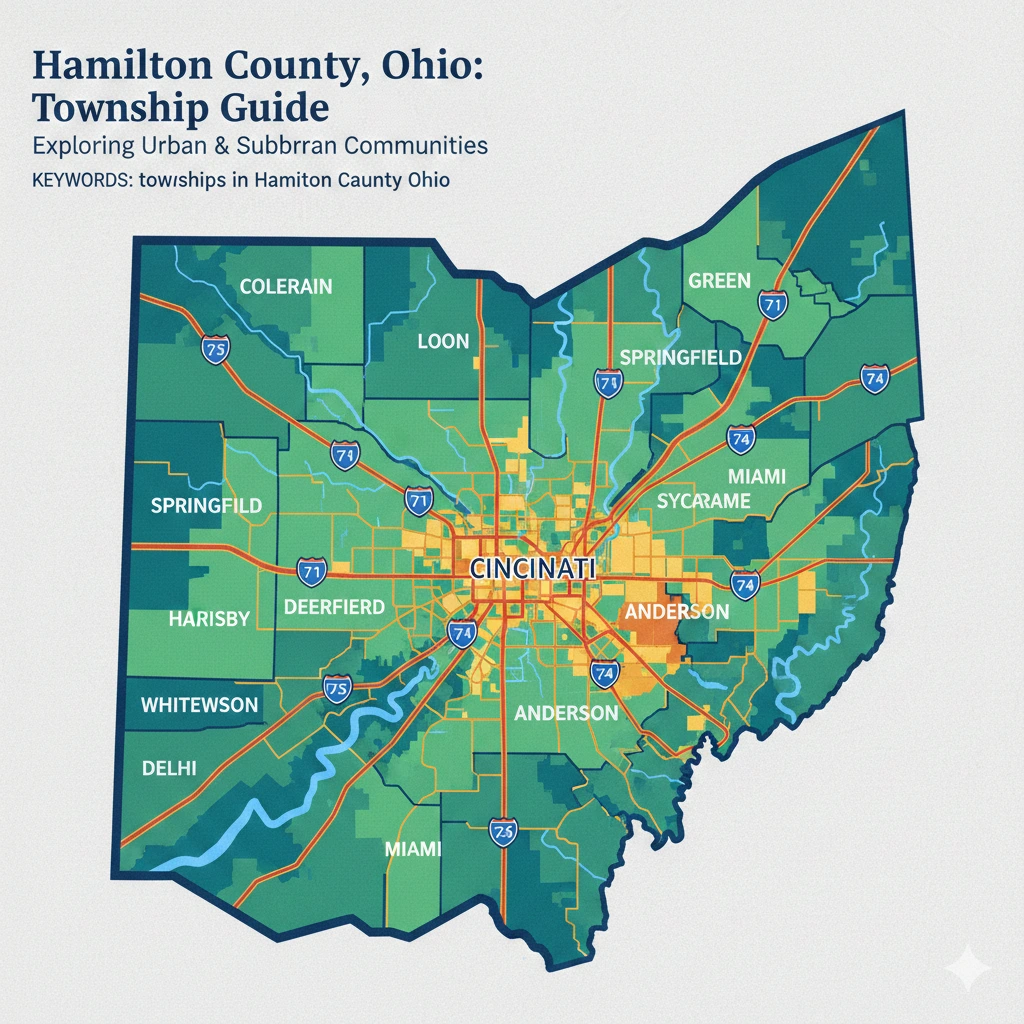
How Many townships in Hamilton County Ohio Exist Today
Hamilton County, Ohio currently has a total of 12 townships, covering areas outside incorporated cities or villages. Townships in Hamilton County Ohio provide essential services and maintain community governance for residents. Knowing the number and structure of these townships is important for relocation, property research, and local planning.
Historical Changes in Township Numbers
Historically, Hamilton County had more townships, but as Cincinnati and surrounding cities expanded:
-
Some townships were dissolved
-
Certain areas were annexed into cities
-
Remaining townships adopted suburban governance systems
This evolution has resulted in the current number of townships in Hamilton County Ohio.
Are New Townships Still Being Created?
The formation of entirely new townships in Ohio is very rare. Today:
-
Focus is on managing and modernizing existing townships
-
Adjustments to boundaries may occur occasionally
-
Township creation follows strict legal requirements
Comparison with Other Ohio Counties
-
Franklin County has fewer active townships due to urban expansion
-
Cuyahoga County has seen most townships absorbed by cities
-
Hamilton County’s township system remains balanced, offering both urban-adjacent and rural governance
This stability makes townships in Hamilton County Ohio ideal for long-term planning, offering residents consistent services and a clear governance structure.
Complete List of townships in Hamilton County Ohio
Hamilton County’s townships play a vital role in suburban planning and local governance. Townships in Hamilton County Ohio provide residents with a mix of urban convenience and suburban comfort. Below is a complete list of all active townships with brief descriptions.
Active Townships
-
Anderson Township – Known for family-friendly neighborhoods and excellent schools.
-
Colerain Township – Offers a mix of residential and commercial areas.
-
Delhi Township – Suburban community with parks and recreational facilities.
-
Green Township – Large rural areas with suburban residential developments.
-
Miami Township – Combines open spaces with growing suburban zones.
-
Springfield Township – Residential focus with moderate population density.
-
Sycamore Township – High-quality schools and strong residential appeal.
-
Symmes Township – Known for family-friendly suburban neighborhoods.
-
Whitewater Township – Mostly rural with natural landscapes and farming areas.
-
Crosby Township – Rural and agricultural with low population density.
-
Harrison Township – Suburban-rural mix, peaceful residential areas.
-
Addyston Township – Small, community-focused township.
Urban vs Rural Township Comparison
-
Urban-adjacent townships: Higher population, developed infrastructure
-
Rural townships: More open land, lower population density
-
Services and amenities vary based on township size and location
Why This List Matters
This list helps homebuyers, investors, and researchers quickly understand townships in Hamilton County Ohio. Unlike competitor articles that only mention names, this guide provides practical context for each township, making it easier to make informed relocation or investment decisions.
townships in Hamilton County Ohio Map Explained
Maps are essential for understanding geography and governance. A clear map of townships in Hamilton County Ohio helps residents, researchers, and planners visualize boundaries, service areas, and jurisdiction, making it easier to interpret written lists and descriptions.
How to Read a Township Map
When looking at a township map, consider these key points:
-
Clear boundary lines defining each township
-
Major roads, highways, and rivers for orientation
-
Labels for township names and zoning areas
-
Adjacent cities and villages for context
Using these tips, residents can fully understand townships in Hamilton County Ohio and their governance areas.
Township Maps vs City Maps Comparison
-
City maps show only incorporated limits
-
Township maps cover surrounding suburban and rural areas
-
Township maps are more useful for land-use planning, zoning, and local services
Why Maps Are Important for Residents
-
Clarify property tax jurisdictions
-
Identify school districts and community zones
-
Define emergency service coverage
Competitor articles often provide static maps only. This guide explains townships in Hamilton County Ohio maps with practical context, helping users not just see but also understand township boundaries and governance.
Townships in Cincinnati and Cincinnati Township Map
Cincinnati, the largest city in Hamilton County, is closely connected with surrounding townships in Hamilton County Ohio. These townships manage suburban and rural areas outside the city limits, offering localized governance and essential services to residents. Understanding the Cincinnati townships is key for relocation, property research, and community planning.
Cincinnati Township Boundaries
Major townships around Cincinnati include:
These townships cover suburban neighborhoods and rural outskirts. Townships in Hamilton County Ohio map these areas, helping residents navigate services, zoning, and property boundaries.
Cincinnati Township Map vs City Map
Comparison:
-
City map: Shows only Cincinnati city limits
-
Township map: Shows surrounding governance areas, residential zones, and rural land
-
Township maps are essential for residents living near Cincinnati suburbs
Real-World Benefits of Township Maps
-
Clarifies local services and emergency response jurisdictions
-
Shows property tax and zoning boundaries
-
Helps identify school districts and community resources
Pros and Cons of Cincinnati Townships
Pros:
-
Localized governance with community focus
-
Suburban lifestyle close to city amenities
-
Lower tax burden than city properties
Cons:
-
Limited urban amenities in some townships
-
Infrastructure development may be slower than in the city
-
Zoning rules vary across townships
Customer Testimonial Highlight
Families moving to suburban Cincinnati often choose Anderson and Sycamore Townships for their peaceful environment, strong schools, and family-friendly communities.
If you are planning to relocate or invest near Cincinnati, reviewing townships in Hamilton County Ohio and their maps is essential to make informed and hassle-free decisions.
What Cities Are in Hamilton County, Ohio
Hamilton County, Ohio is a mix of urban, suburban, and rural areas. While townships in Hamilton County Ohio manage areas outside city limits, understanding the major cities is equally important. Cities serve as economic, educational, and cultural hubs, complementing the surrounding townships.
Major Cities in Hamilton County
The key cities include:
-
Cincinnati – The largest city and county seat
-
Sharonville – Suburban city with residential and commercial areas
-
Blue Ash – Growing urban-suburban community
-
Springdale – Industrial and residential mix
-
Forest Park – Family-friendly suburban environment
-
Norwood – Dense urban residential city
-
Reading – Suburban community with access to Cincinnati amenities
Cities vs Townships Comparison
| Feature |
Cities |
Townships |
| Governance |
Mayor-Council |
Trustee-Fiscal Officer |
| Population Density |
High |
Low to Moderate |
| Taxes |
Higher |
Lower |
| Services |
Full urban amenities |
Suburban & rural-focused |
| Land Use |
Dense development |
Balanced residential & open space |
This comparison helps homebuyers and investors understand the differences between townships in Hamilton County Ohio and cities.
Why Knowing Cities Helps
-
Identifies school districts and community resources
-
Supports property investment and relocation decisions
-
Clarifies access to urban amenities while living in townships
Customer Testimonial Highlight
Residents often prefer suburban townships like Anderson or Colerain for family-friendly living while staying close to Cincinnati’s urban conveniences.
For relocation or investment planning, understanding both townships in Hamilton County Ohio and nearby cities ensures informed decisions and smoother transitions.
New townships in Hamilton County Ohio
Hamilton County’s township system is stable, but occasional adjustments and updates occur. Townships in Hamilton County Ohio continue to evolve with boundary changes and mergers, though the creation of entirely new townships is extremely rare. Understanding these changes is important for residents, investors, and planners.
Are New Townships Being Formed?
-
New township creation is uncommon due to strict Ohio laws
-
Most changes involve boundary adjustments, mergers, or annexations
-
Focus remains on managing and modernizing existing townships
Township Adjustments vs New Formation
-
Adjustments: Boundary modifications, annexations, and partial mergers
-
New Formation: Rare, legally complex, requires state approval
This distinction is critical for understanding townships in Hamilton County Ohio.
Why Monitoring Township Changes Matters
-
Supports real estate and investment decisions
-
Assists community planning and infrastructure development
-
Helps residents understand local governance and tax responsibilities
Pros and Cons of Township Changes
Pros:
-
Improved governance and service efficiency
-
Better zoning and land-use management
-
Strengthened community identity
Cons:
-
Temporary confusion during boundary updates
-
Possible disruption in services
-
Legal complexities during mergers
Customer Testimonial Highlight
Residents report that boundary adjustments have improved emergency response times and service delivery, highlighting the practical benefits of township management.
If you plan to relocate or invest in Hamilton County, regularly reviewing updates on townships in Hamilton County Ohio is essential for informed and hassle-free decision-making.
Hamilton County, Ohio Recorder and Its Role in Townships
The Hamilton County Recorder office plays a crucial role in property management and local governance. Townships in Hamilton County Ohio rely on the Recorder for official documents, maps, and historical records, helping residents and investors verify township boundaries and property ownership.
Responsibilities of the Recorder’s Office
-
Maintaining property deeds and title records
-
Providing township boundary maps
-
Making surveys and legal documents publicly accessible
-
Archiving historical township records
These services ensure transparency and accountability for townships in Hamilton County Ohio, supporting residents and investors in informed decision-making.
Comparison With Other Ohio Counties
-
Franklin and Cuyahoga Counties have similar services
-
Hamilton County offers user-friendly online access
-
Maps and records are efficiently available, making township research easier than in other counties
Why Recorder Access Matters
-
Essential for real estate investment and title verification
-
Prevents disputes over township boundaries
-
Helps check property tax compliance and zoning regulations
Pros and Cons
Pros:
Cons:
Customer Testimonial Highlight
Residents and local planners praise the Recorder office for making online maps and records easily accessible, simplifying property searches and investment planning.
When relocating or investing in Hamilton County, always verify townships in Hamilton County Ohio through the Recorder’s office to ensure accurate legal documentation and informed decisions.
Conclusion – Understanding townships in Hamilton County Ohio
Hamilton County, Ohio features a well-structured township system that plays a critical role in local governance. Townships in Hamilton County Ohio are more than just geographic divisions; they provide residents with essential services, zoning oversight, and community planning. This guide has covered everything from township lists, maps, city comparisons, new township updates, to the role of the Hamilton County Recorder, providing a complete resource for relocation, property investment, or research.
Key Takeaways
-
Hamilton County has 12 active townships covering urban, suburban, and rural areas
-
Townships and cities differ in governance, services, and taxes
-
Township maps and Recorder records are essential for residents and investors
-
Formation of new townships is rare, though boundary adjustments occur
Pros and Cons Recap
Pros:
-
Localized governance tailored to community needs
-
Family-friendly, suburban lifestyles near urban centers
-
Lower tax burden compared to city areas
Cons:
-
Limited urban amenities in some townships
-
Infrastructure development may be slower in rural areas
-
Boundary changes may cause temporary confusion
If you are planning to relocate or invest in Hamilton County, reviewing townships in Hamilton County Ohio through maps, official records, and updated lists is essential to make informed, hassle-free decisions.
Frequently Asked Questions (FAQs) – townships in Hamilton County Ohio
1. How many townships in Hamilton County Ohio are there?
Hamilton County has a total of 12 townships, covering areas outside the incorporated cities. These townships provide local governance, services, and community planning.
2. What is the difference between a township and a city in Hamilton County?
Cities manage dense populations with full urban amenities, while townships in Hamilton County Ohio provide suburban or rural governance, lower taxes, and localized services.
3. Can new townships be formed in Hamilton County, Ohio?
Creating new townships is extremely rare. Most changes involve boundary adjustments, mergers, or annexations, while existing townships continue to evolve.
4. Where can I find a map of townships in Hamilton County Ohio?
Official Hamilton County websites and the Recorder’s office provide detailed township maps, showing boundaries, roads, zoning, and adjacent cities for residents and investors.
5. Which townships are closest to Cincinnati city?
The major townships surrounding Cincinnati include Anderson Township, Colerain Township, Springfield Township, and Green Township, offering suburban neighborhoods near the city.
6. Why is the Hamilton County Recorder important for townships?
The Recorder office maintains property deeds, maps, and historical records, helping residents verify townships in Hamilton County Ohio boundaries and make informed real estate or investment decisions.
7. Are townships in Hamilton County good for residential living?
Yes, townships in Hamilton County Ohio offer family-friendly communities, suburban lifestyles, access to urban amenities, and lower population density, making them ideal for residential living.